OUTDOOR SPACES
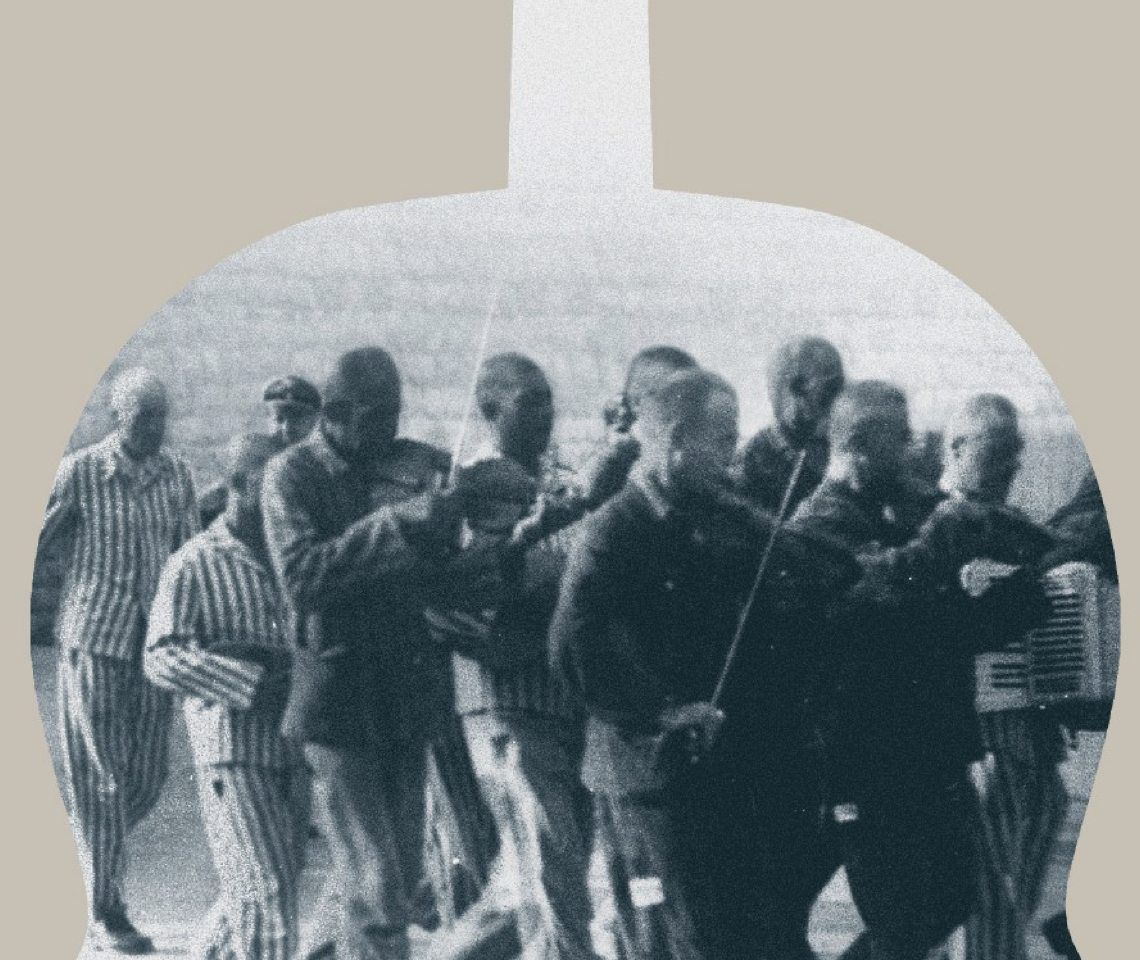
In Nazi camps, music has different functions if played in outdoor spaces or inside barracks.
The music performed outside is mainly performed under duress, on the orders of the SS or guards and under their supervision: it serves first of all to ensure the synchronization of the steps of the mass of inmates.
On the doorstep, the camp’s call-in square and the main “streets”, it contributes above all to the proper functioning of the Nazi machine.
Credit: Ella Liebermann-Shiber, Walk to Work, Auschwitz-Birkenau. Ghetto Fighters House Archive
Focus – torture music
In the camps, music is used to serve the sadism of the SS while reinforcing the humiliation and suffering inflicted on the victim.
The pieces chosen belong to the light repertoire dear to the Germans: excerpts of operettas by Franz Lehár, sentimental songs by Zarah Leander, etc.
The lightness of their tone and the alluring nature of their words accentuate the horror of the situation.
Credit : « Jan Komski, I was in Auschwitz », 1990-1997 Dessin à l’encre Musée national Auschwitz Birkenau
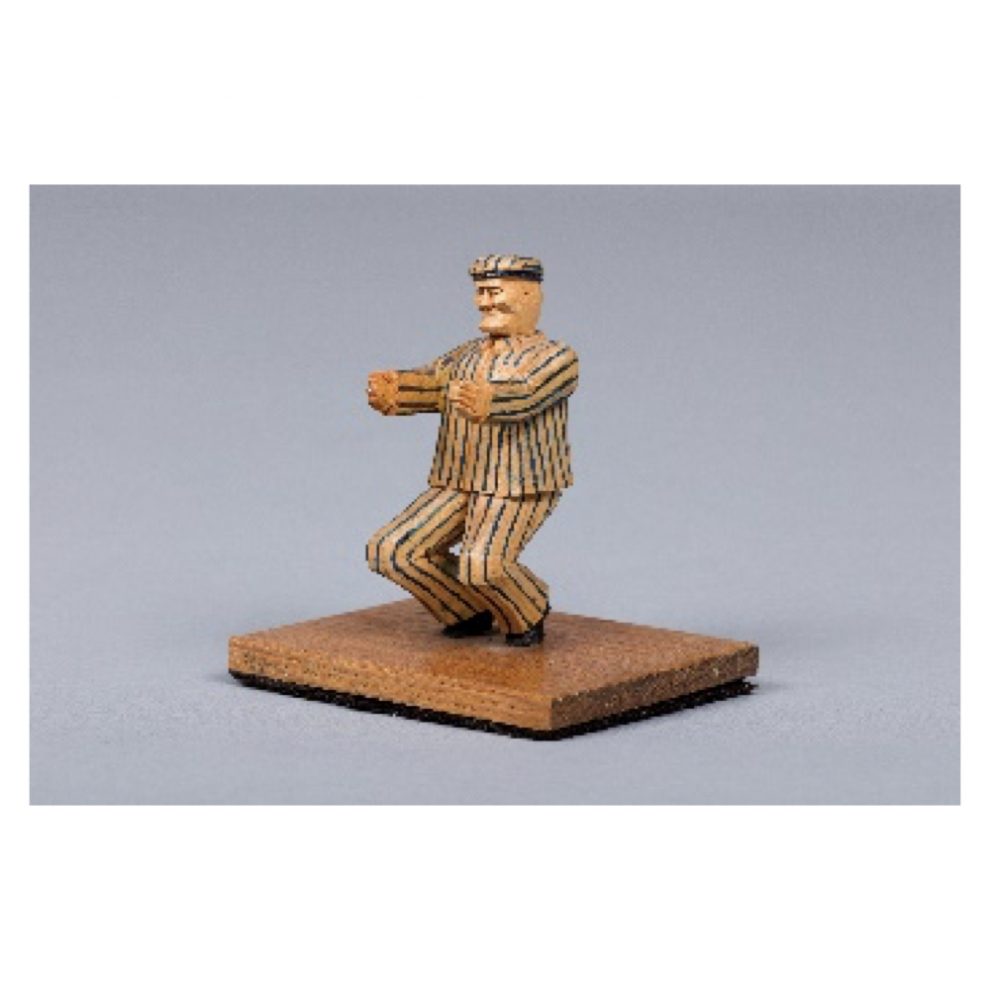
Arthur Birkner, Sculpture clandestine 1936-1945, camp de Sachsenhausen Bois, paint. © Memorial and Museum Sachsenhausen
THE DOOR
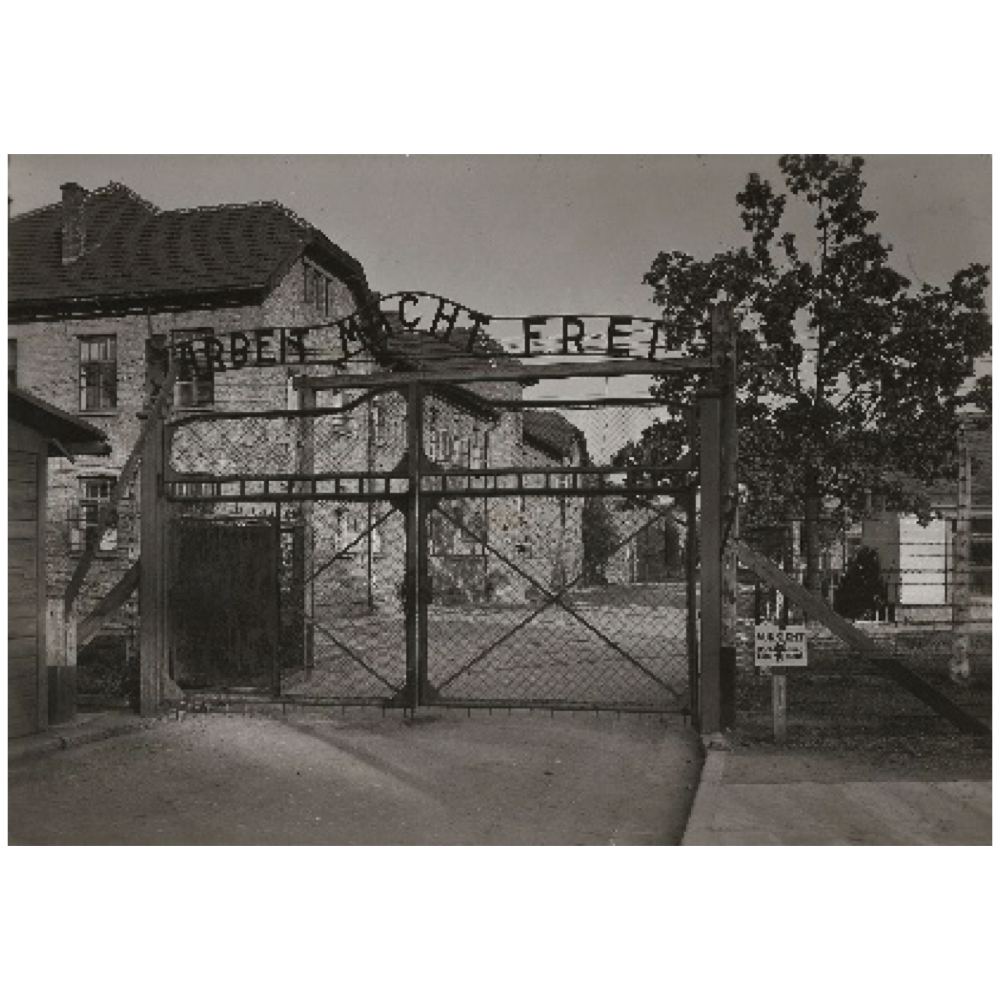
The gate of the camp, often decorated with the motto Arbeit macht frei, «Labor makes free», is crossed daily by most of the prisoners, then slaves dedicated to the works of the Reich.
From the door to the place of work, obligation is made to sing, under the supervision of the guards who escort them. The return is also in song.
All detainees, whatever their nationality, must therefore assimilate the repertoire of German folk songs, including songs by SS soldiers, to be sung aloud and without error under penalty of being beaten.
Credit: Gate with the motto Arbeit macht frei, January 1945, Auschwitz camp I, Photograph by Stanislaw Mucha, Shoah Memorial/Coll. Stanislaw Mucha
DEPARTURE OF THE KOMMANDOS
After the call in the morning, the Kommandos set off towards the workplaces outside the concentration camps.
When they were set up, the orchestra played military music near the door: marches of the German army, military marches of Franz Schubert and Johann Strauss, etc.
Once out, the inmates sing marching songs without musical accompaniment. Requiring singing on this occasion allows the SS an optimal coordination of pitch and prevents unauthorized communication.
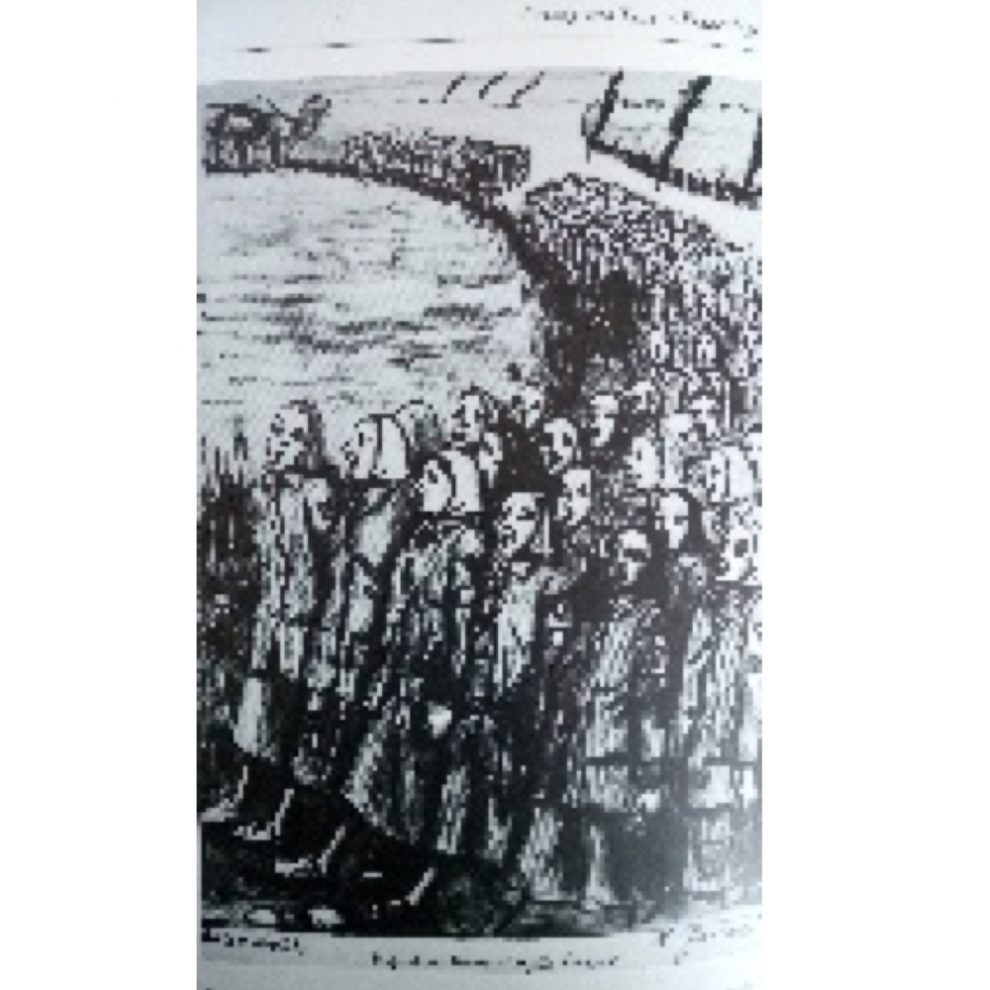
Nina Jirsíková, Departure for work, 1944, Ravensbrück Fusain camp. © Shoah Memorial 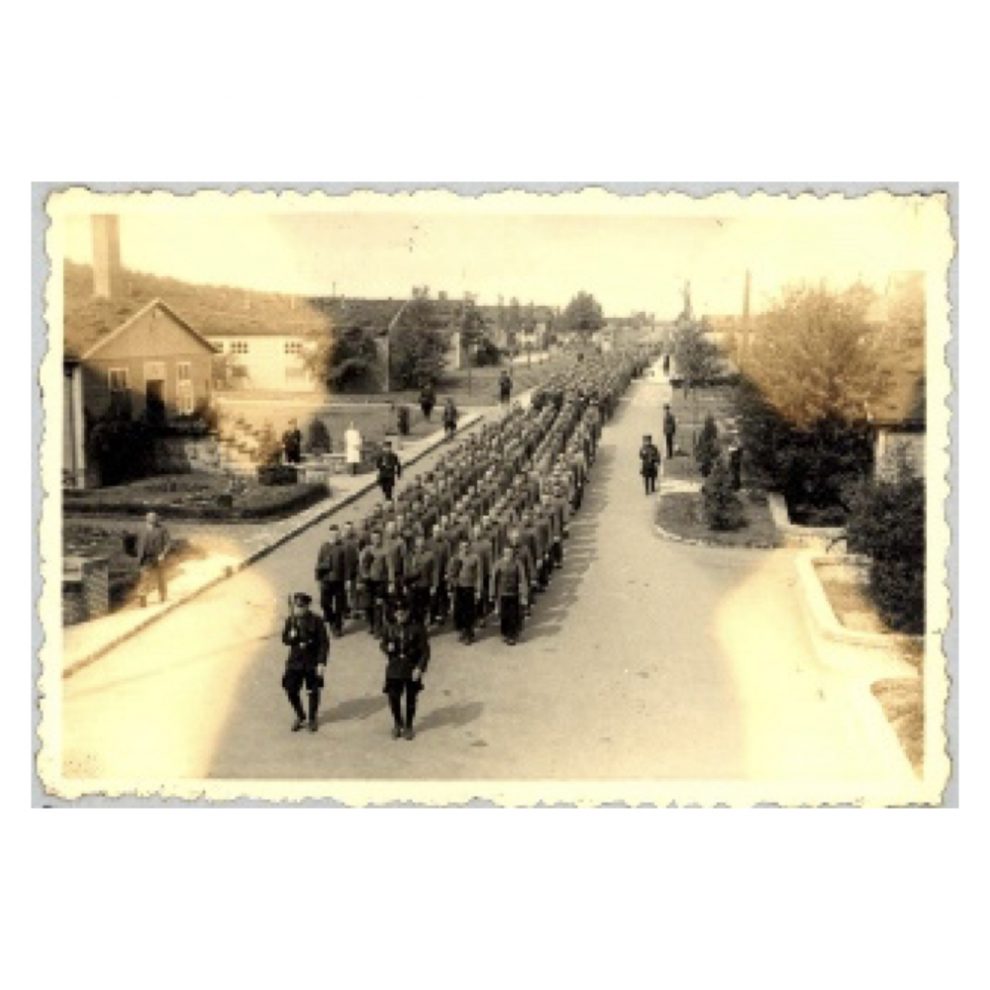
Departure of the Kommandos for work, 1934, Esterwegen camp , SS photography, Yad Vashem Photo Archive, Jerusalem
RETURN OF THE KOMMANDOS
At the end of a day of forced labour, the return of the Kommandos to the camps must also be done in songs then, after the passage of the door, to the sound of the orchestra.
Its driving rhythm, which must be followed at all costs or be beaten, inflicts additional pain on exhausted inmates, who sometimes carry their sick or deceased comrades during the day and cannot keep up with the imposed pace.
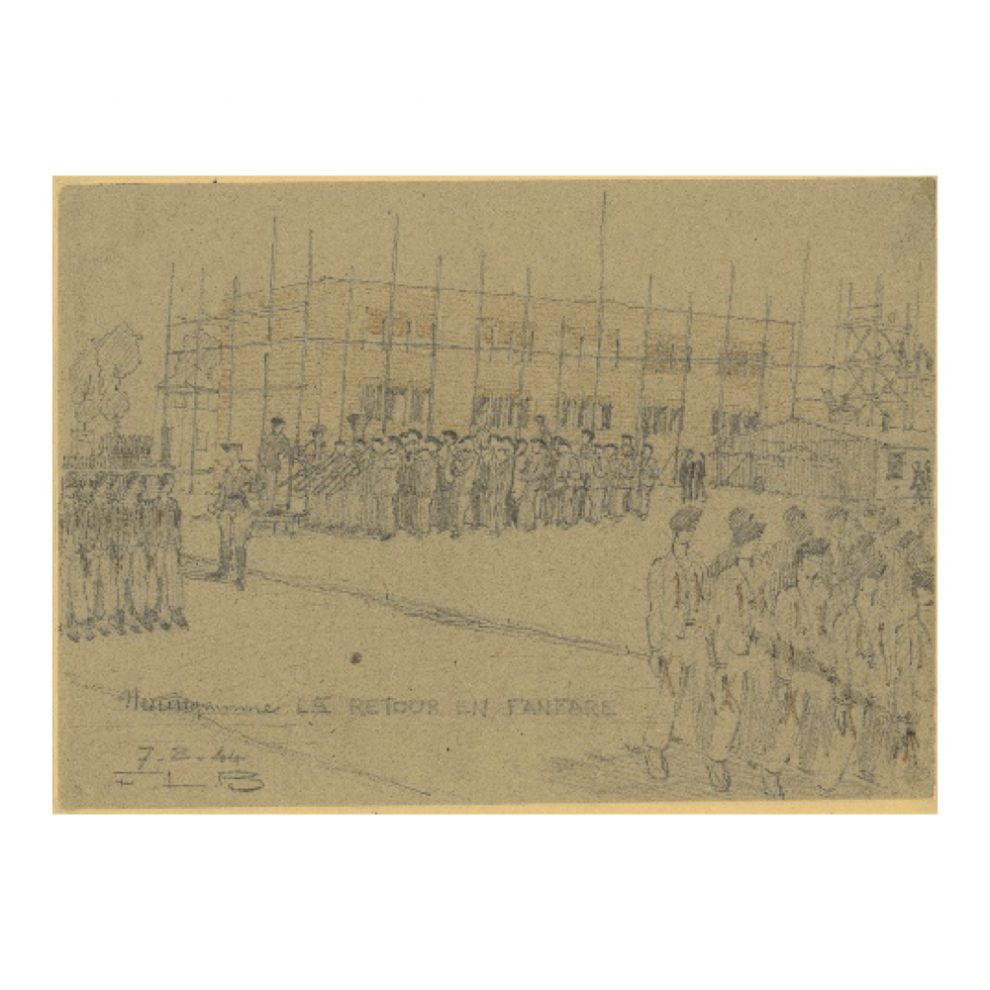
Félix Lazare Bertrand, Le Retour en fanfare 7 August 1944, camp de Neuengamme. Paper, vellum paper, graphite pencil and red pencil. © Order of Liberation Museum
THE PLACE OF THE CALL
The soundscape of the call centre contrasts between silence at the time of the call and music on other occasions. Morning and night, in all weather, the detainees gather there by the thousands so that the SS proceed with the count and ensure that no escape took place.
Some SS commanders may inflict hours of song after the evening call, aggravating suffering and encroaching on “rest” time as a form of collective punishment or entertainment.
Credit: Song book with the «Buchenwaldlied» illustrated, 1942-1943, Sachsenhausen Camp. ©Akademie der Künste
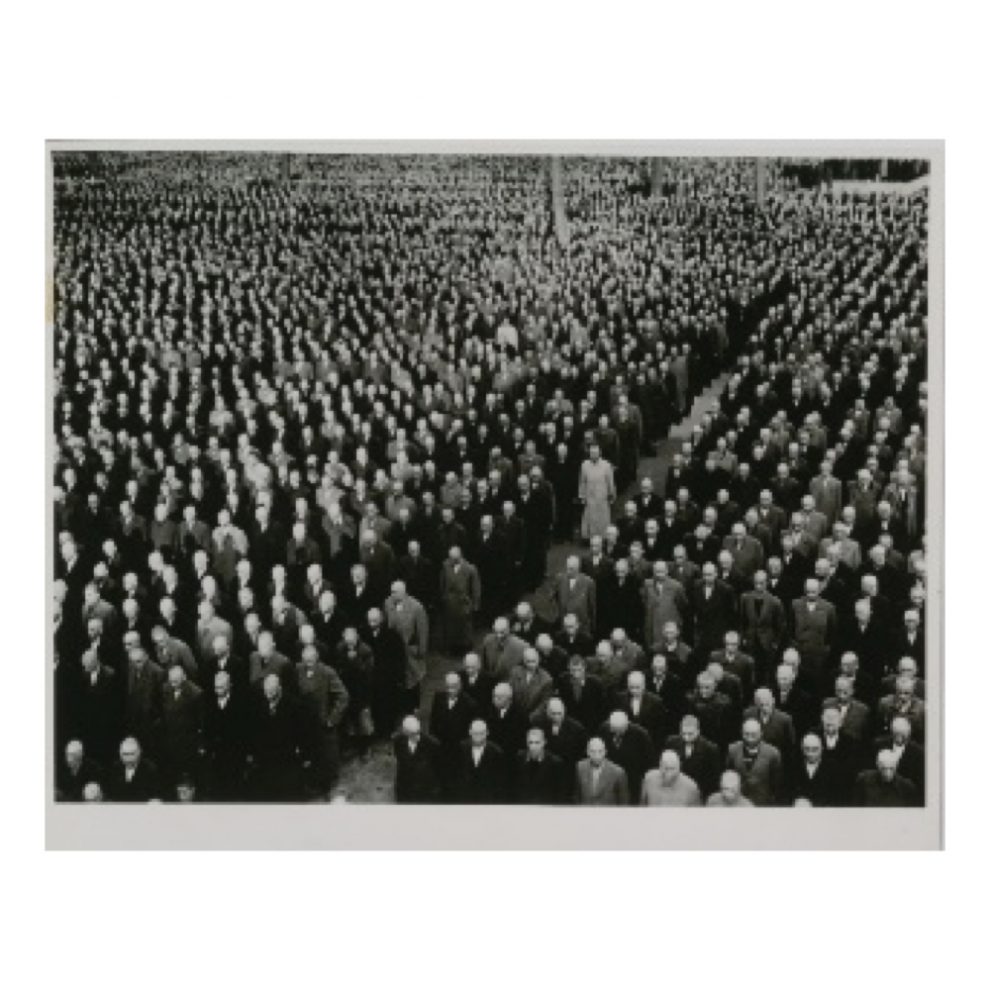
Buchenwald Call, November 1938, Buchenwald camp, SS Photography. © Shoah Memorial
CAMP “STREETS”
Forced and spontaneous music rub shoulders in the «streets» between the blocks.
It is in these streets that some condemned to death wander, in front of their comrades, to the sound of the orchestra. In camps where work stops on Sundays, inmates who have the strength are allowed to walk the streets for a few hours in small groups.
On the occasion of these rare moments when surveillance is released, information is exchanged, patriotic or political songs are sung in a low voice.
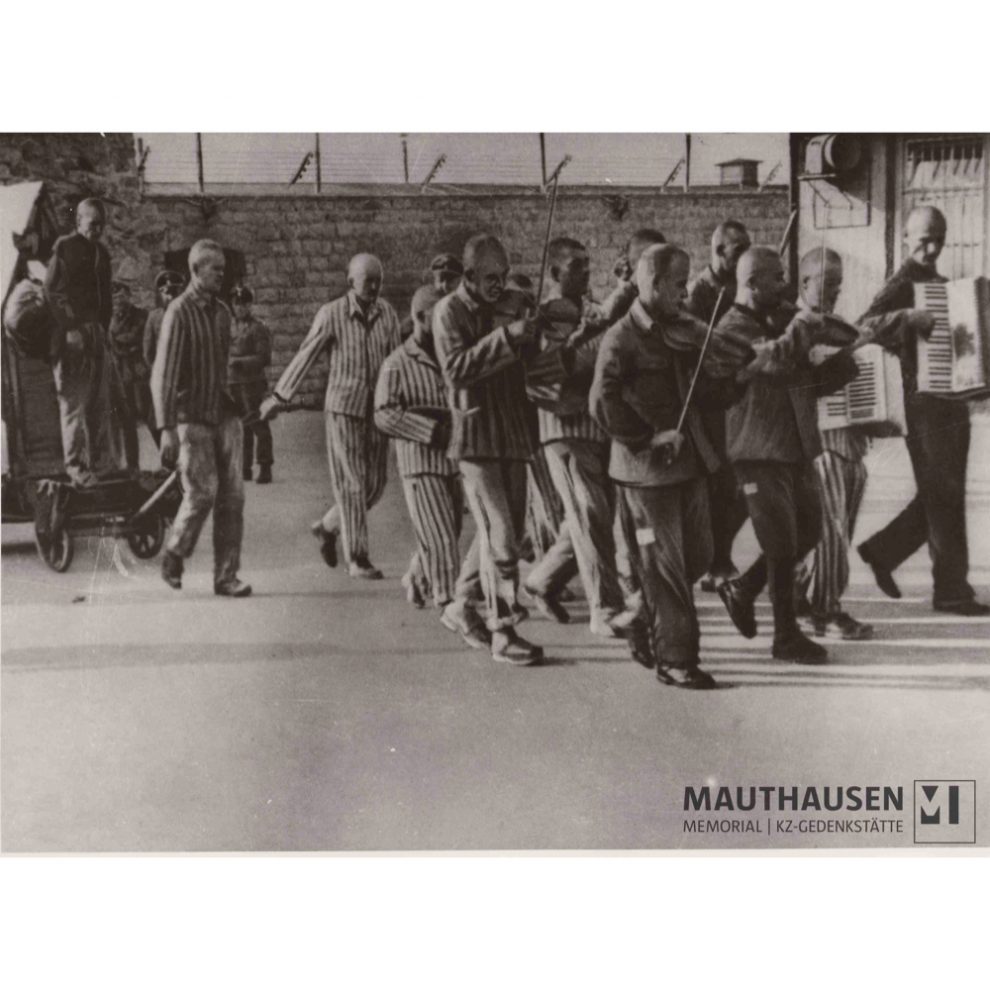
Wandering of Hans Bonarewitz, 30 July 1942, Mauthausen camp, Photograph SS. © Shoah Memorial 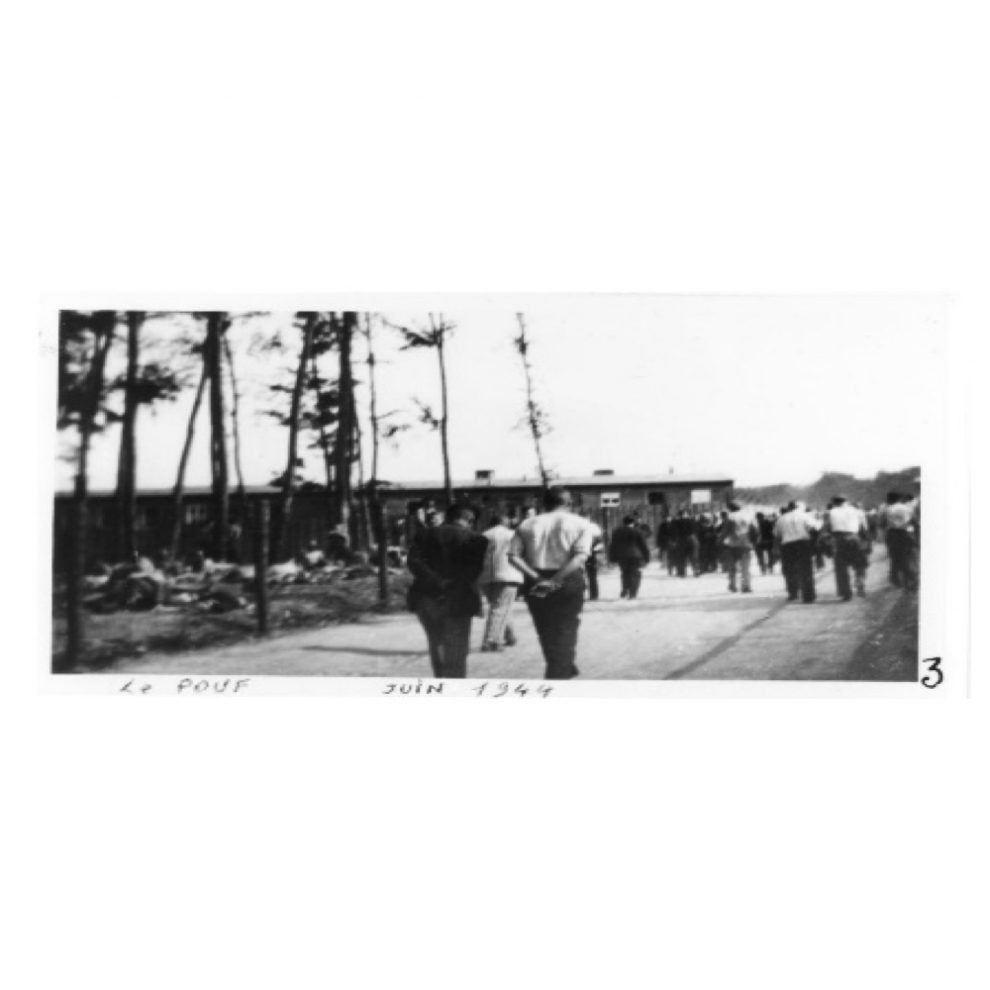
"Le pouf" : Photo clandestine de Georges Angéli, juin 1944, camp de Buchenwald Stiftung Gedenkstätten Buchenwald und Mittelbau-Dora
Focus – Music intrusive
The music played by the speakers on the call-in area, at the entrance and even inside the inmate blocks, can be described as intrusive, as long as it forces the listener to listen.
In the early camps, speakers frequently broadcast Hitler’s speeches, followed by the Nazi Party anthem and scholarly music that the regime acclaimed.
Later, they were used to relay the commander’s orders. It also happens that the SS broadcast for their entertainment, on Sundays or at night, recordings of sentimental songs, thus depriving the inmates of sleep.
Credit: Detainees forced to listen to a SA orchestra at the gates of the Dachau camp. June 1933. Photograph by SS Friedrich Franz Bauer, © KZ-Gedenkstätte Dachau